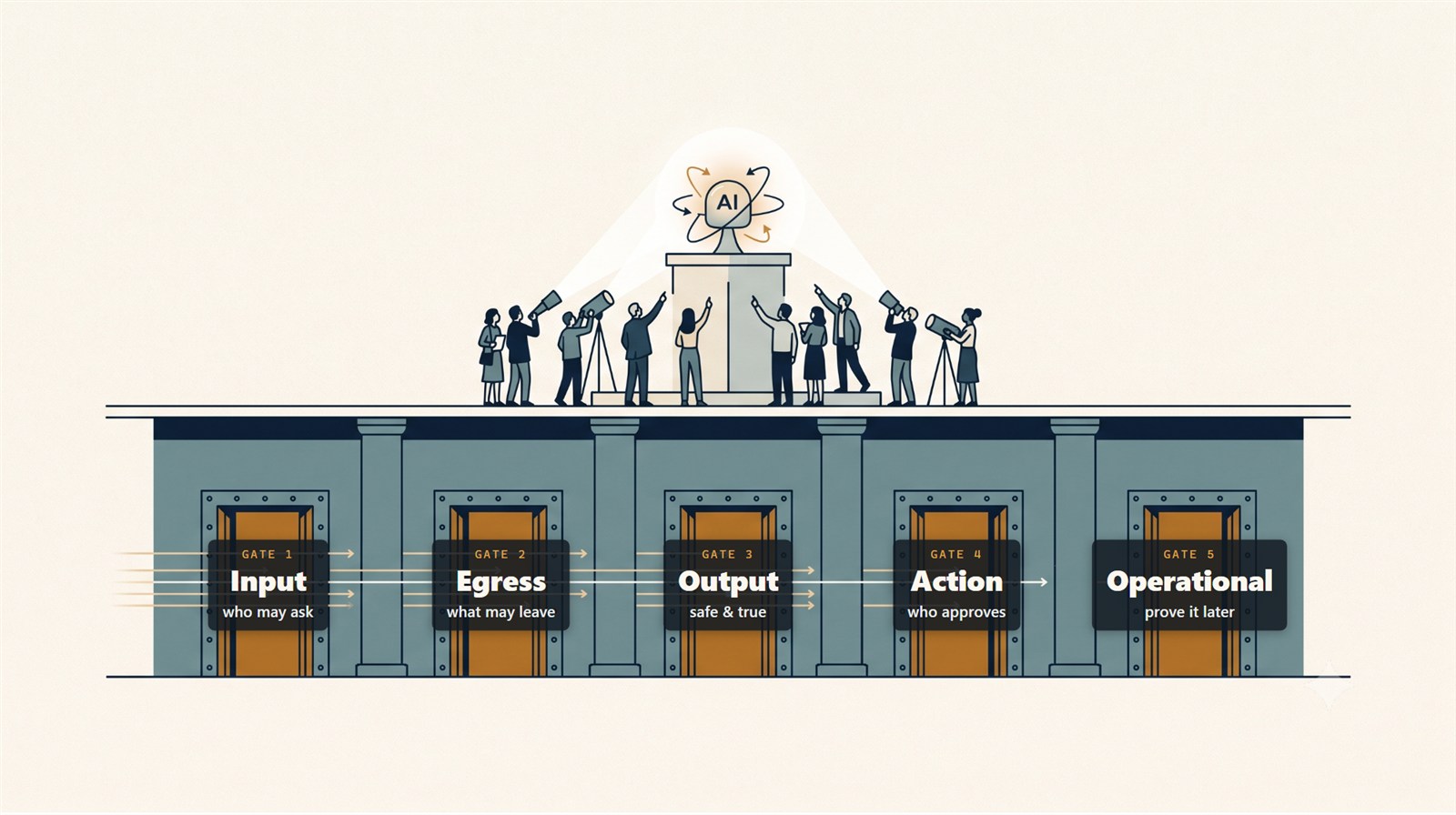
Input: who is allowed to ask? One agent often serves many teams. It must not let an HR user pull Finance's records, or let one client's data appear in another client's answer. Orchestration assumes the person asking is allowed. The input gate checks first: who is asking, and for whose data, before it touches a single document.
Egress: what is allowed to leave? The moment your agent calls an outside model, your data is on someone else's server. The egress gate reads the classification of what is about to leave and decides where it goes. Confidential data stays on your own model, inside your organization. Only cleared data leaves, and only after it is redacted. This is the gate that stops a patient record or a deal memo from quietly becoming training data for someone else's model.
Output: is the answer itself safe and correct? Even when the data never leaves, the answer can still cause harm. It might show a private name it should have hidden, or cite a source that does not exist. The output gate hides what should not be shown, and checks that every citation points to a real passage. The answer cannot leak, and it cannot make things up.
Action: who approves before something cannot be undone? Reading data can be undone. Changing or deleting it cannot. The operations that matter here are not exotic: permanently deleting someone's records, erasing their data to honor a “forget me” request, or removing files when a retention deadline arrives. Each one is permanent. Each one should wait for a named person to approve it. The action gate holds these changes until they are approved. Nothing destructive happens on its own.
Operational: can you prove it, months later? When an auditor asks what the agent did back in March, “we think it was fine” is not an answer. The operational gate keeps a permanent record of every request, every routing decision, and every action. It lives in a log that no one, not even you, can change afterward. Governance you cannot prove is governance you do not have.